

“AI THINKING IN A NUTSHELL” & “DETECTION OF NETWORK COMMUNITIES USING A MODIFIED MODULARITY CRITERION”
29 November 2024 20:00
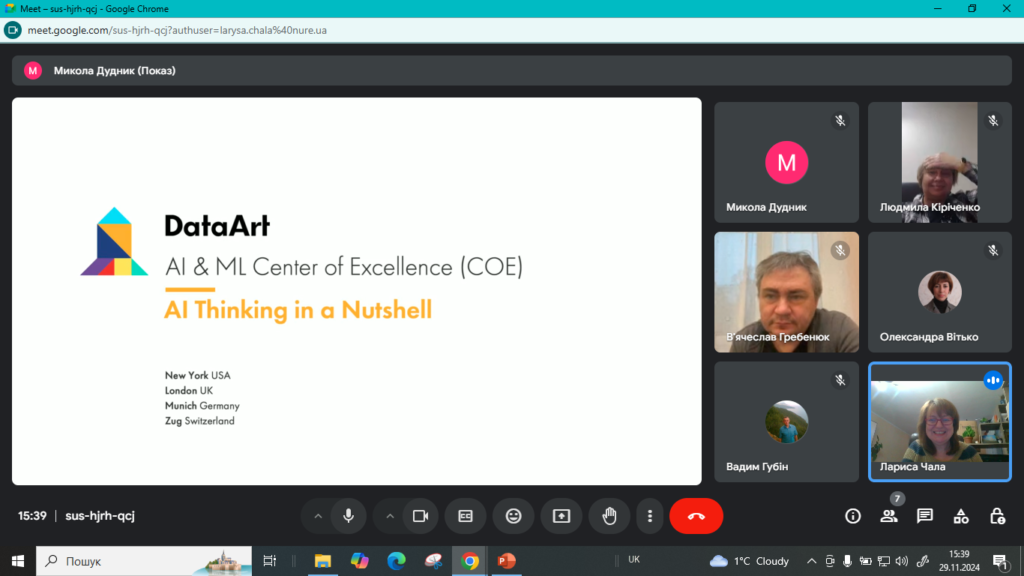
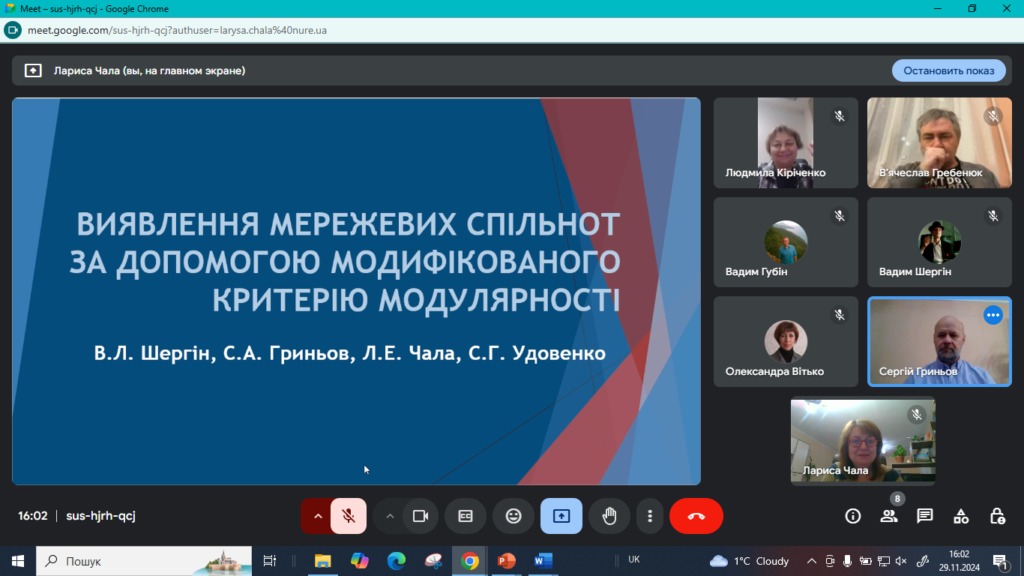
On November 29, 2024, a regular meeting of the AI Department’s seminar was held, featuring two presentations:
- AI THINKING IN A NUTSHELL. Presenter: Mykola Dudnyk, AI/ML Technical Lead at DataArt and alumnus of the AI Department. link
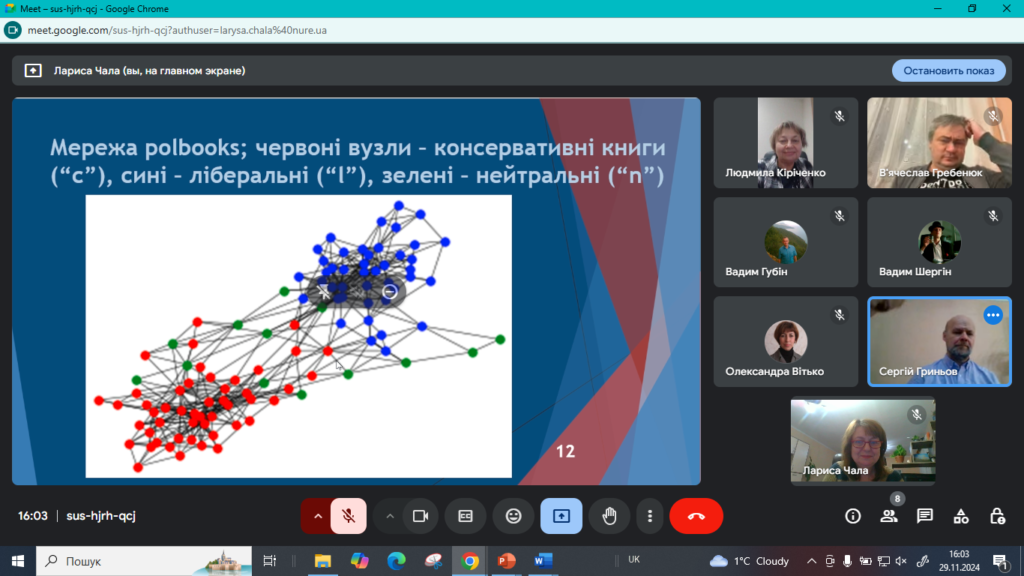
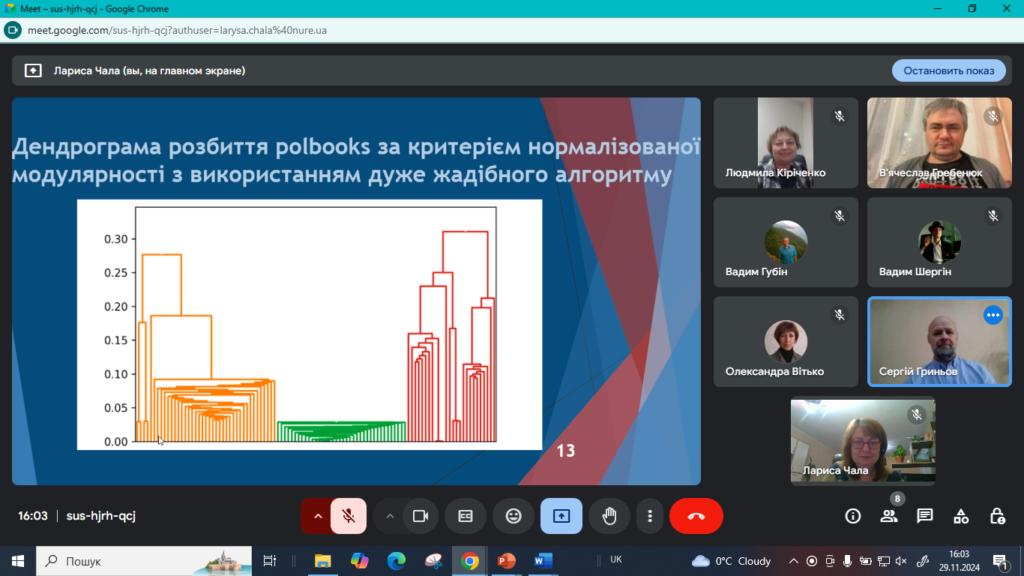
- DETECTION OF NETWORK COMMUNITIES USING A MODIFIED MODULARITY CRITERION Presenter: Serhii Gryniov, Assistant Lecturer of the AI Department. link
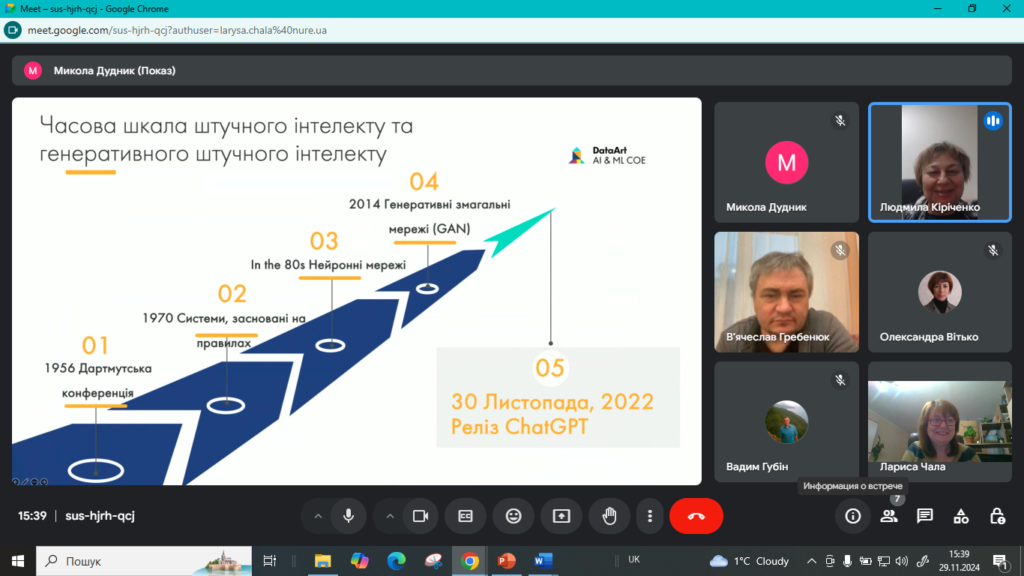
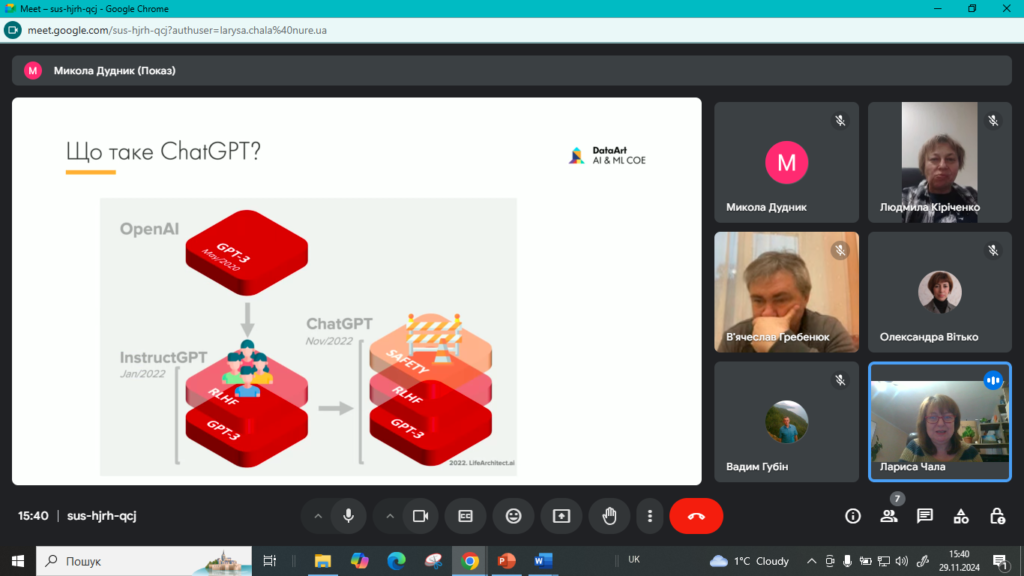
The first presentation provided an overview of the history of generative artificial intelligence, outlining the timeline of open-source large language models (LLMs). It highlighted that teaching LLMs to “think” is crucial for complex, sequential tasks requiring integration with external resources such as fact-checking, reasoning, mathematical operations, or executing code. New concepts for addressing these tasks were discussed, including Langchain, Chain of Thought, and Toolformer. A comparison of task performance using chain-of-thought prompts, default prompts, and ReAct with default queries was also presented. Mykola concluded by showcasing the DataArt AI Platform and its advantages.
The second presentation addressed the community detection problem, which involves dividing a network’s nodes into communities. A modified modularity criterion was proposed, which depends on the number of nodes in communities and tends to highlight small communities or even individual nodes. The criterion is normalized, enabling comparisons across different numbers of communities and evaluating their quantity if unknown. A developed greedy algorithm for maximizing modularity ensures low computational complexity and fast execution. Testing on classical datasets confirmed the method’s efficiency.
Inviting alumni to departmental scientific seminars fosters their connection with their alma mater, keeps them updated on cutting-edge research, and supports their professional development. For the department, it provides an opportunity to leverage alumni expertise, exchange ideas, build networks for scientific and professional collaborations, and help faculty stay informed about the latest technologies.