

“Noncorrelational assortativity coefficient for networks with nominative attributes” & “The End of Reading, or the End of Generative AI Hallucinations: Educational Strategies for Combating Clip-Thinking”
16 November 2024 20:00

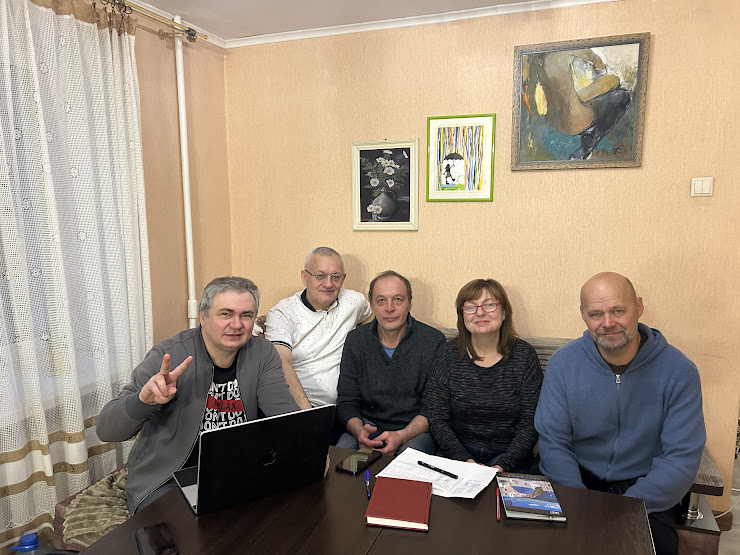
The lack of “live” communication negatively impacts scientific communities’ work by slowing the exchange of ideas, as informal discussions often lead to unexpected discoveries. It also reduces opportunities for building trust and fostering effective collaboration among researchers. Additionally, isolation can adversely affect scientists’ motivation and mental well-being, diminishing their productivity. At the same time, communication and informal discussions are key drivers for developing new approaches, methods, and ideas.
In light of this, the Artificial Intelligence Department has revived the departmental scientific seminar in a hybrid format, preserving the best traditions.
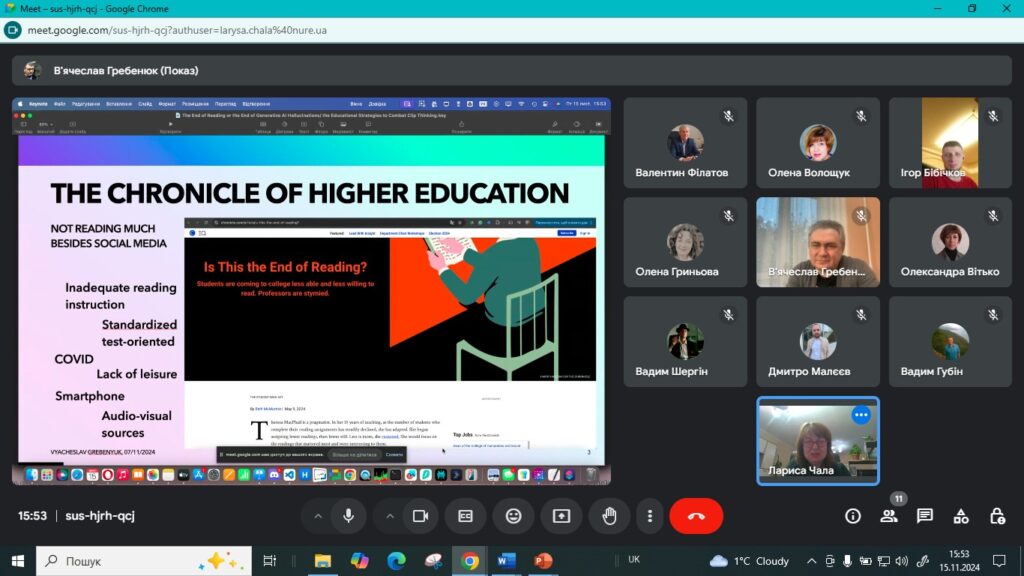
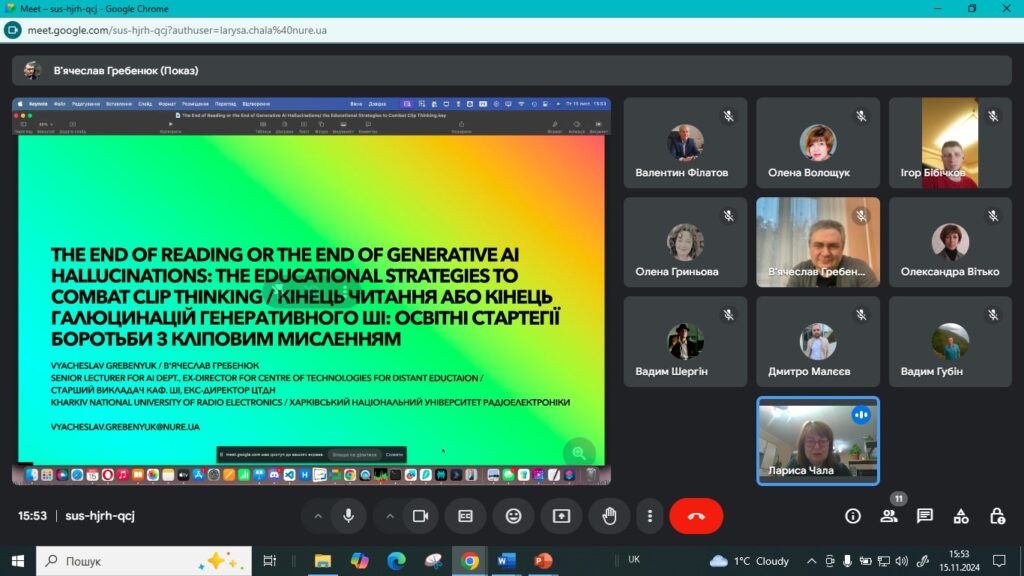
On November 15, 2024, the first seminar session took place, featuring two presentations that sparked lively discussions:
-
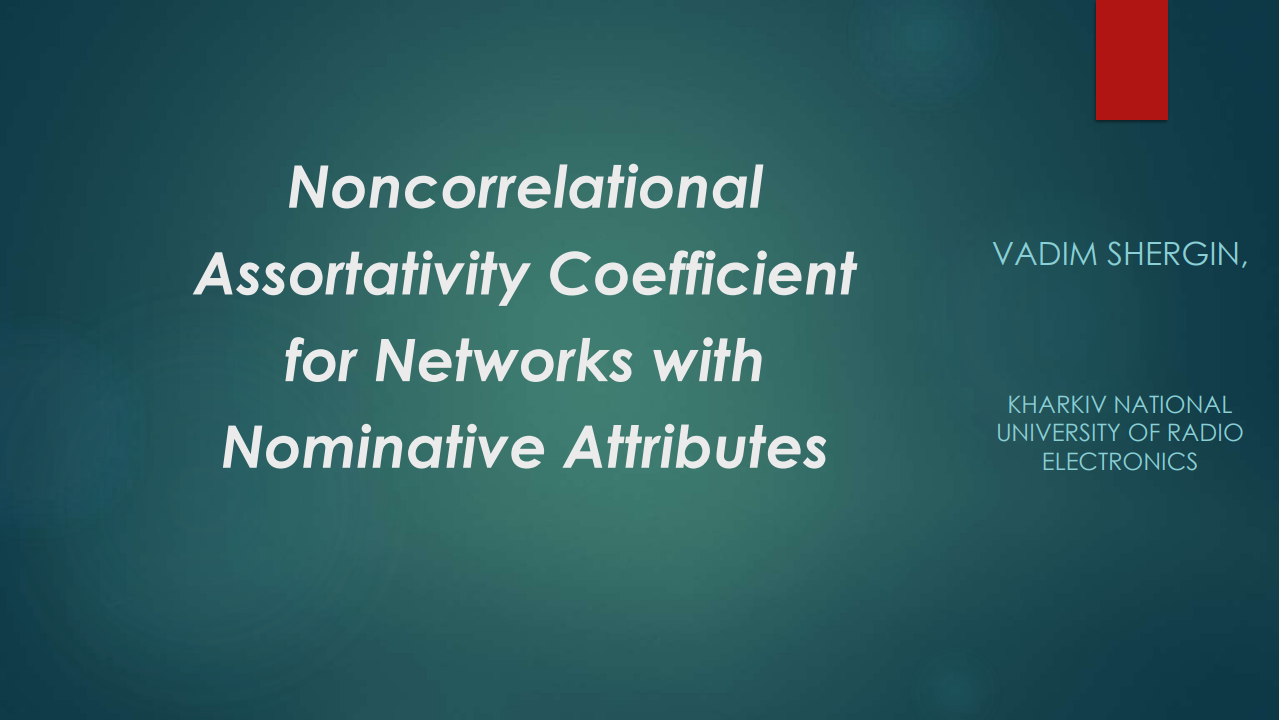
- Noncorrelational assortativity coefficient for networks with nominative attributes. Speaker – Vadim Shergin. link
-
- The End of Reading, or the End of Generative AI Hallucinations: Educational Strategies for Combating Clip-Thinking. Speaker – Vyacheslav Grebenyuk
The first presentation considered the assortativity is an important network characteristic that measures the tendency of nodes to link with nodes that are similar or dissimilar in some property. We propose non-correlational assortativity coefficient for networks with binary or, in general, nominative attributes. The proposed coefficient takes into account not only the number of edges connecting nodes with similar and dissimilar attribute values, but also the number of nodes representing each node class. Therefore, this metod of assessing assortavity seems more suitable for a network with unbalanced classes. The non-correlation assortativity coefficient can be calculated not only for the entire network, but also for any individual node or an arbitrary group of nodes, i.e. locally. So, the proposed method allows us to identify nodes that are outliers in their assortativity.
The second report states that modern education faces a critical challenge as reading habits decline dramatically among students, with research showing only 17% of 13-year-olds reading daily in 2020, compared to 35% in 1984. This crisis is fueled by information overload, smartphone distractions, and the prevalence of audio-visual content. The emergence of AI technologies like ChatGPT, while offering quick solutions, presents additional challenges through potential misinformation and “hallucinations.” A concerning trend of “clip thinking” has emerged, characterized by short attention spans and superficial information processing, leading to reduced analytical capabilities. To address these challenges, educators are implementing strategies that combine traditional reading with multimedia approaches, focusing on developing critical thinking skills, improving information literacy, and building cognitive resilience among both students and teachers in our digital age.
Beyond the previously mentioned aspects, the urgency of establishing the seminar is further driven by the fact that the lack of in-person meetings limits the development of interdisciplinary connections, as ideas for joint projects often emerge during live interactions. This communication deficit also complicates mentorship, experience sharing, and the training of young researchers, who frequently require informal support. Finally, the remote format cannot fully replace the charisma and impact of live presentations, which inspire and engage a broader audience in scientific discussions.
Therefore, the hybrid format of the seminar will enhance the quality of scientific research. We aim to hold departmental seminars regularly, involving a greater number of researchers, faculty members, graduate students, and specialists from other departments to discuss interdisciplinary studies.