

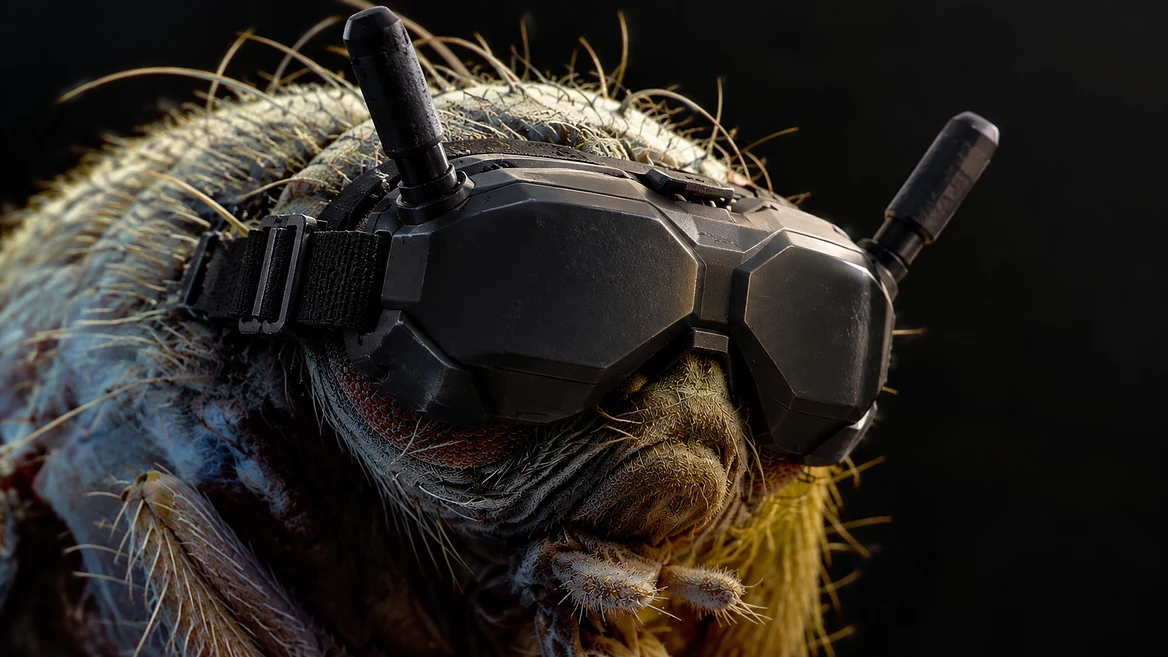
From Memes to DefTech: AI Department Graduate Trains Digital Fly Brain to Fly an FPV Drone
24 September 2026
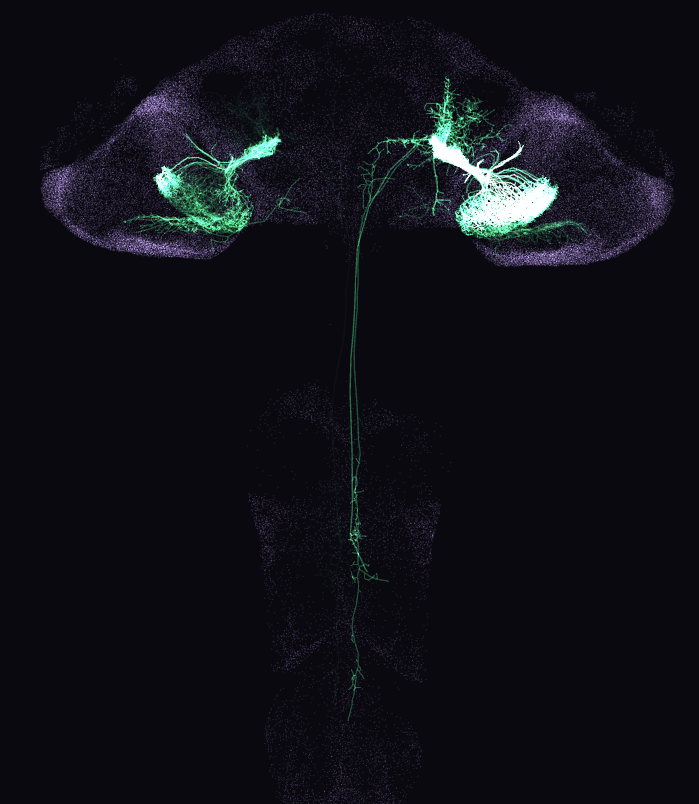
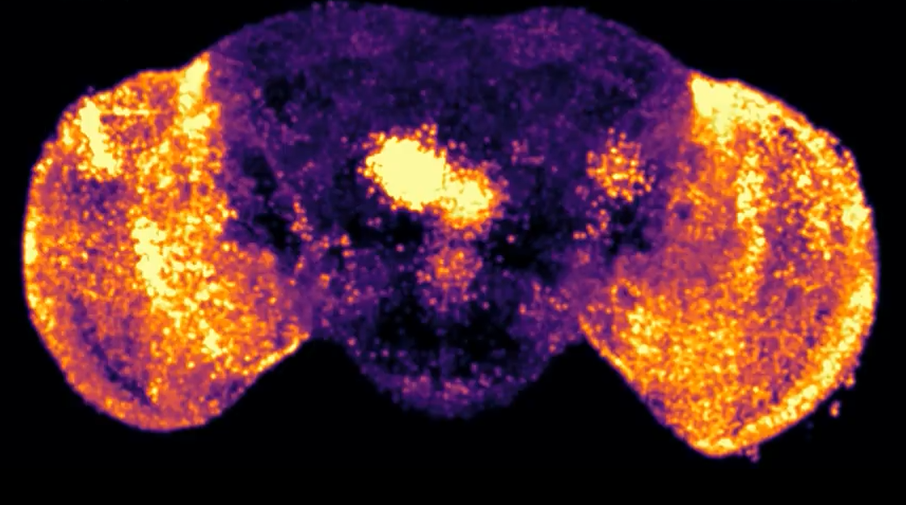
While the global tech community experimented with the digitized brain of a fruit fly by forcing it to play Minecraft, Doom, or trade cryptocurrency, Dmytro, a graduate of our department specializing in “Artificial Intelligence Systems,” found a real-world engineering application for this neurobiological breakthrough. A Kharkiv-based developer with over 10 years of experience integrated the full digital neural model of the insect into a flight simulator, where biological reflexes natively help the UAV avoid obstacles and keep the horizon.
How Our Graduate’s Approach Differs from “Fly Slop”
The foundation for this experiment was a monumental scientific milestone achieved by Google Research and HHMI Janelia Research Campus — a complete connectome of an adult male Drosophila melanogaster, containing over 166,000 neurons and nearly 125 million synapses.
Most online enthusiasts used this map merely as a static blueprint, completely retraining artificial synaptic weights for tasks foreign to an insect (such as pressing mouse buttons or reading stock charts). Dmytro took a much more challenging and scientifically elegant path: without retraining the connectome weights at all, he preserved the biological reflexes honed by millions of years of evolution and fed visual signals from the flight simulator directly into the virtual sensory organs.
Anatomy of a Digital Reflex
To achieve this, the department’s alumnus meticulously modeled the physics of insect perception:
- Compound Eyes: Modeled a complex eye consisting of 1,769 ommatidia/facets based on Google data. The video stream from the flight simulator is pixelated and fed directly into virtual photoreceptors.
- Proximity Detectors (LPLC2 & LC4): These visual tract neurons react to objects expanding rapidly in the field of view (such as trees or obstacles). Activating these circuits generates a native escape response, automatically forcing the drone to perform evasive roll and yaw maneuvers.
- Ocelli for Level Flight (3 Simple Eyes): Simulated horizon light sensors. When the drone tilts, ocellar neurons signal neck motor neurons (CvN5–7), triggering a reflex body alignment.
- Decoding into UAV Commands: Downward motor neurons (descending motor neurons) transmit signals that are aggregated into 4 standard UAV control channels: roll, pitch, yaw, and throttle.
Execution on Consumer Hardware & DefTech Horizons
Remarkably, the entire simulation of 166,000 neurons runs locally on a consumer PC equipped with an Intel Core i7-3770K CPU and 16 GB RAM, using the Claude Code AI assistant to accelerate script development.
Beyond academic curiosity, such research opens promising avenues for autonomous UAV development, particularly in Defense Tech. Insects navigate complex spaces without energy-draining LiDARs or GPS reliance. Implementing these evolutionary biological “microcontrollers” onto hardware (FPGA or compute-in-memory chips) enables the creation of ultra-fast, EW-resistant autonomous drones operating solely on low-level optical flow reflexes.
We are proud of our graduate and wish him success and creative inspiration!
Read more: https://dev.ua/news/fly-slop-fpv-dron